About Tafsir Guidance

Tafsir Guidance is a research initiative and platform of the Tafsir Department at Darul Qasim College. It is dedicated to producing rigorous, methodologically grounded Tafsir research and presenting it in a form accessible to the broader Muslim and academic community.

The work conducted here is distinctive in its integration of classical tafsir scholarship, systematic research methods, and contemporary analytical frameworks. Each contribution is rooted in the transmitted interpretive tradition while engaging carefully with linguistic, thematic, and conceptual dimensions of the Quran. Our aim is not only to explain verses, but to cultivate a disciplined understanding of the Quran that is intellectually accountable and practically meaningful.

As a branch of Darul Qasim’s Tafsir Department, Tafsir Guidance serves as both a research hub and a public-facing resource—bridging advanced scholarship with clear guidance for serious readers.

Tafsir Question Submission

This Tafsir Question Submission form is for submitting questions on the interpretation of the Quran within a research-based tafsir framework. Each submission is reviewed with methodological care, and selected questions may be developed into written responses. To view examples, see below under Tafsir Research.

Forthcoming Release

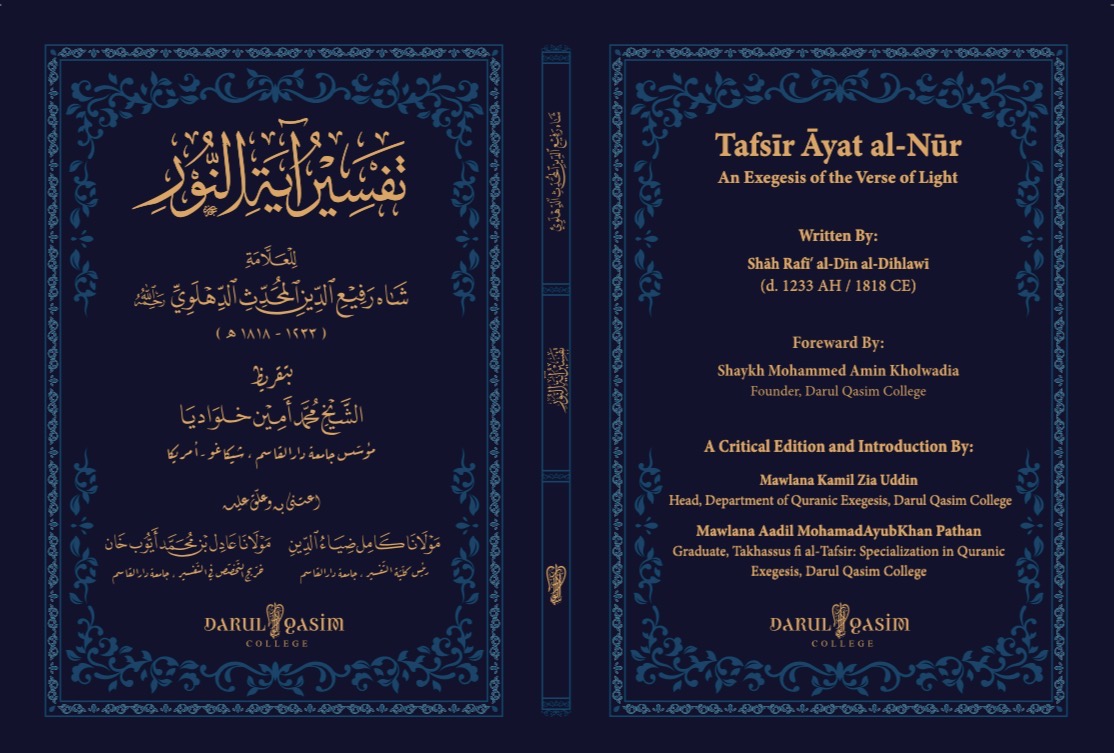
Tafsīr Āyat al-Nūr is a forthcoming critical edition of Shāh Rafīʿ al-Dīn al-Dihlawī’s landmark exegesis of the Verse of Light (Quran 24:35). This work is distinguished by its rare intellectual ambition and methodological depth. Moving beyond purely abstract or speculative readings, it offers a holistic exegetical synthesis that integrates Quranic sciences, ḥadīth, theology, and spiritual insight through multiple structured interpretive approaches.

Despite its immense value, the work did not achieve wide circulation in its original Arabic form. Its modern revival began through the efforts of Mawlānā ʿAbd al-Ḥamīd al-Swātī, whose revised edition with Urdu translation and commentary reintroduced the tafsīr to new generations of scholars. Building upon that foundation, the present edition returns particular focus to the original Arabic text, clarifying its structure, documenting variant manuscripts, and illustrating its exegetical architecture through scholarly annotation and historical study.

In presenting this tafsīr now, we do so not merely as a textual undertaking, but as a tribute to the continuity of a scholarly heritage that links Delhi to Deoband and the Walī Allāhan household to the ongoing tradition of Islamic learning in the Indian subcontinent and beyond. This edition offers readers a window into the deeper, holistic hermeneutical methods cultivated within early modern Islamic scholarship, bringing a major intellectual contribution into renewed contemporary conversation.

We look forward to sharing a work that opens fresh pathways for students and scholars seeking deeper engagement with the conceptual rigor and interpretive sophistication of classical tafsīr.

Tafsir Research